

Every nonprofit celebrates new donors.
But sustainable impact isn’t built on first gifts — it’s built on relationships.
If you’ve ever looked at your donation reports and wondered why so many supporters give once and disappear, you’re not alone. Across the sector, donor retention remains one of the biggest — and most overlooked — growth challenges.
The truth?
Donors don’t stop giving because they don’t care.
They stop because they don’t feel connected.
This guide breaks down how nonprofits can move beyond transactional fundraising and intentionally guide supporters through the donor lifecycle, using proven donor retention strategies, real nonprofit examples, and a simple retention framework that actually works.
Why Donor Retention Matters More Than Ever
Acquiring a new donor can cost 5–7 times more than retaining an existing one. Yet many organizations still prioritize constant acquisition over long-term engagement.
According to research highlighted by Classy, nonprofits with strong retention programs grow revenue faster — even with fewer new donors.
Retention isn’t about sending more emails or asking for money more often.
It’s about building trust, belonging, and shared purpose.
When donors feel emotionally invested, they don’t just give again — they advocate, volunteer, and bring others with them.
Understanding the Donor Lifecycle (Beyond the First Gift)
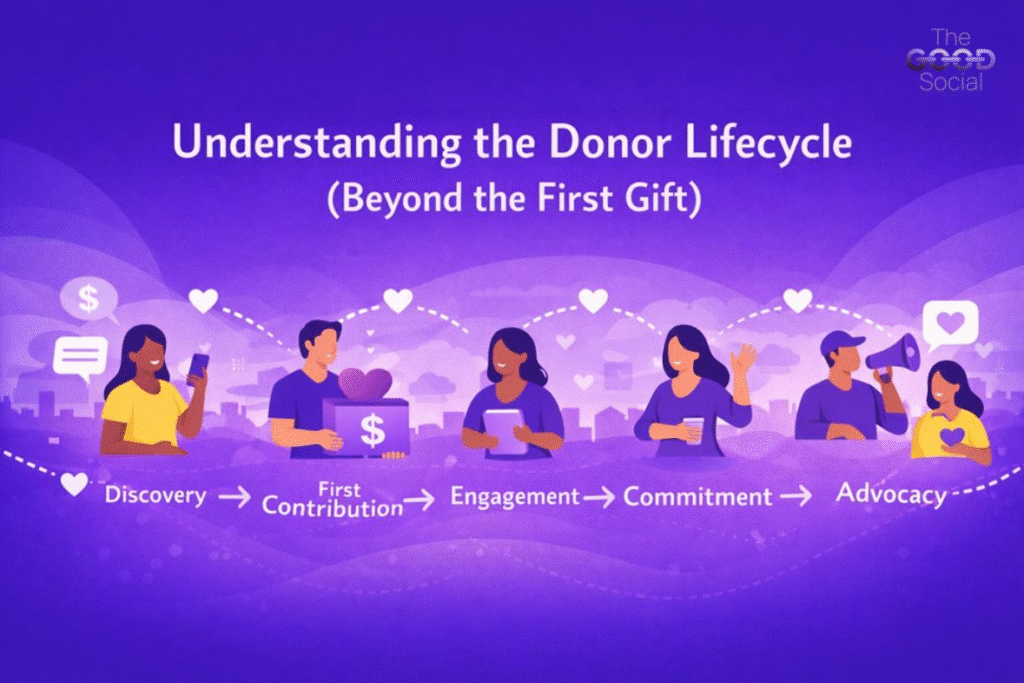
A healthy donor lifecycle includes five key stages:
1. Discovery
A donor first encounters your mission — often through social media, a friend, or a story that resonates.
2. First Contribution
They give because they believe in the cause — but trust is still fragile here.
3. Engagement
This is where most nonprofits lose people. If donors don’t hear back, see impact, or feel included, the relationship stalls.
4. Commitment
Supporters start identifying with your mission. They follow updates, engage with content, and give again.
5. Advocacy
Your donors become champions — sharing, volunteering, and bringing others into your community.
Retention happens when nonprofits intentionally guide supporters from transaction → connection → community.
A Simple Donor Retention Framework That Works
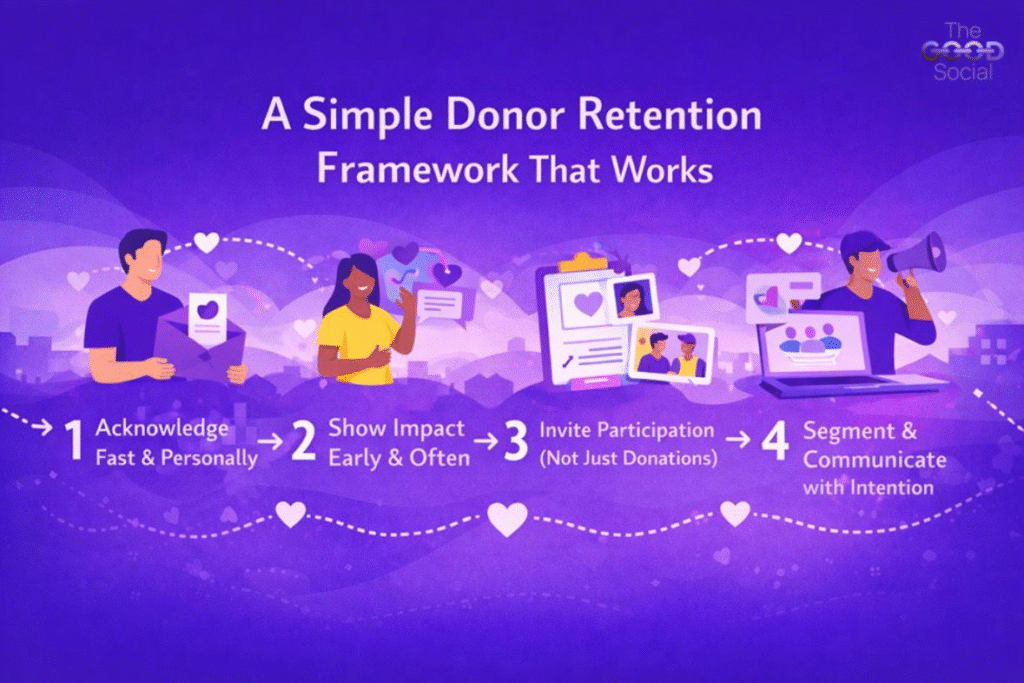
Here’s a practical Nonprofit Donor Retention Framework you can start using immediately:
Step 1 — Acknowledge Fast and Personally
A donor’s first emotional moment comes after they give.
A prompt, human thank-you — not a generic receipt — builds immediate trust. Video messages, personalized notes, or donor spotlights can dramatically improve second-gift rates.
HubSpot consistently emphasizes that timely, personalized communication increases lifetime engagement across industries — nonprofits included.
Step 2 — Show Impact Early and Often
Donors don’t want reports.
They want stories.
Instead of waiting for annual updates, show impact in small, consistent moments:
- A photo from the field
- A short story about one beneficiary
- A behind-the-scenes post
This storytelling approach keeps donors emotionally invested between asks.
Step 3 — Invite Participation (Not Just Donations)
Long-term donor engagement grows when supporters feel like participants, not ATMs.
Invite donors to:
- Comment on updates
- Attend virtual events
- Share why they support your cause
Platforms like The Good Social help nonprofits and everyday people connect around shared missions — creating community, not just campaigns.
Step 4 — Segment and Communicate with Intention
Not all donors are the same.
Segment supporters based on:
- First-time vs recurring donors
- Causes they care about
- Engagement behavior
According to insights shared by Hootsuite, relevance is one of the strongest drivers of digital engagement — and the same applies to donor communication.
Step 5 — Build Belonging, Not Dependency
Retention improves when donors feel they belong to something bigger than a single gift.
This could mean:
- Highlighting donors as part of your story
- Creating shared spaces for supporters and nonprofits
- Encouraging peer-to-peer interaction
Community-driven nonprofit growth is no longer optional — it’s essential.
Real-World Example: Relationship-Based Fundraising in Action
Consider nonprofits that shifted from campaign-only fundraising to year-round storytelling and community engagement.
Organizations that regularly share:
- Volunteer voices
- Donor journeys
- Program updates
see stronger retention because supporters understand where they fit in the mission.
This mirrors what relationship-based fundraising experts consistently highlight: people stay when they feel seen.
Where Digital Strategy Fits In (Without Losing the Human Touch)
Digital tools don’t replace relationships — they support them.
When used intentionally, digital platforms help nonprofits:
- Stay visible between campaigns
- Foster conversation instead of broadcasts
- Create trust through transparency
That’s why social-first ecosystems matter. The Good Social isn’t an automation tool — it’s a social app designed to bring nonprofits, donors, volunteers, and everyday people into one shared space, strengthening relationships naturally.
The Future of Donor Retention Is Community-Led
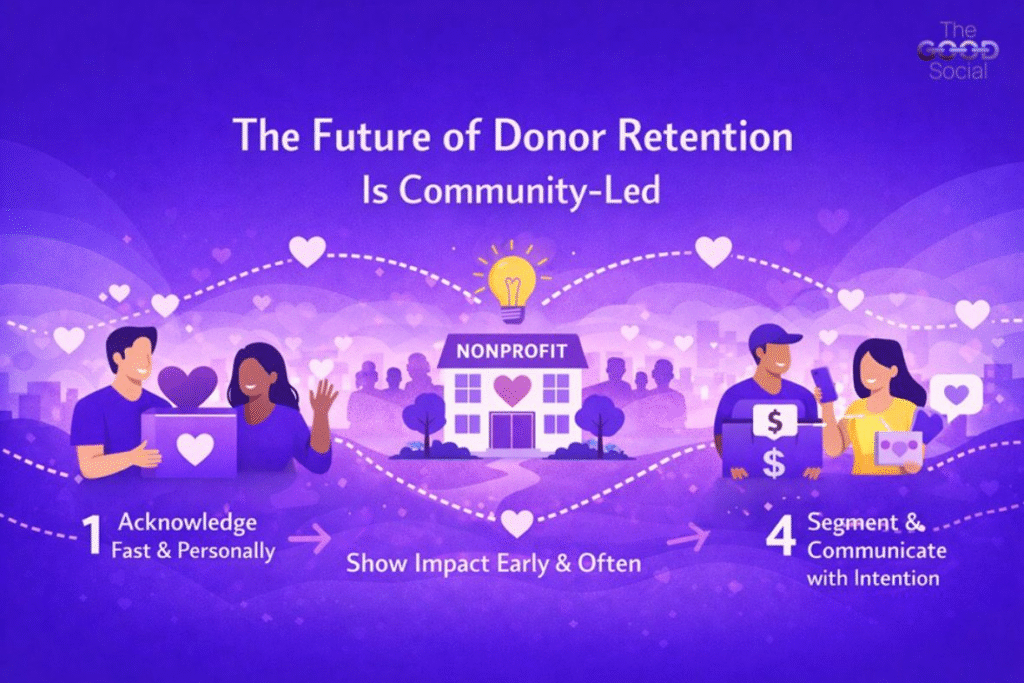
The nonprofits that thrive in the next decade won’t be the loudest — they’ll be the most connected.
Retention strategies that work today prioritize:
- Trust over tactics
- Storytelling over selling
- Community over campaigns
When donors feel part of your journey, giving again becomes a natural next step — not a hard sell.
Final Thoughts: Retention Is a Mindset, Not a Metric
Turning one-time donors into long-term supporters doesn’t require a bigger budget — it requires a clearer intention.
Focus on:
- Human connection
- Consistent storytelling
- Meaningful engagement
The results follow.
If you’re ready to strengthen donor relationships and build sustainable growth:
👉 Explore more nonprofit insights at https://blog.thegoodsocial.net
👉 Discover how community-driven tools can support your mission at https://thegoodsocial.ai
Your donors are already listening — now it’s time to invite them closer.