

The nonprofit sector is stepping into 2026 with a new reality: attention is harder to earn, trust matters more than ever, and communities expect to be part of the mission—not just observers of it.
The nonprofits that will thrive in 2026 won’t necessarily be the ones with the biggest budgets. They’ll be the ones that understand how people connect today—through stories, shared values, and authentic digital spaces.
This isn’t about chasing trends.
It’s about recognizing where the sector is heading—and preparing with intention.
In this blog, we break down the most important nonprofit trends for 2026, why they matter, and what smart teams are doing now to stay relevant, trusted, and connected.
Trend #1 — Community Becomes the Core Growth Strategy
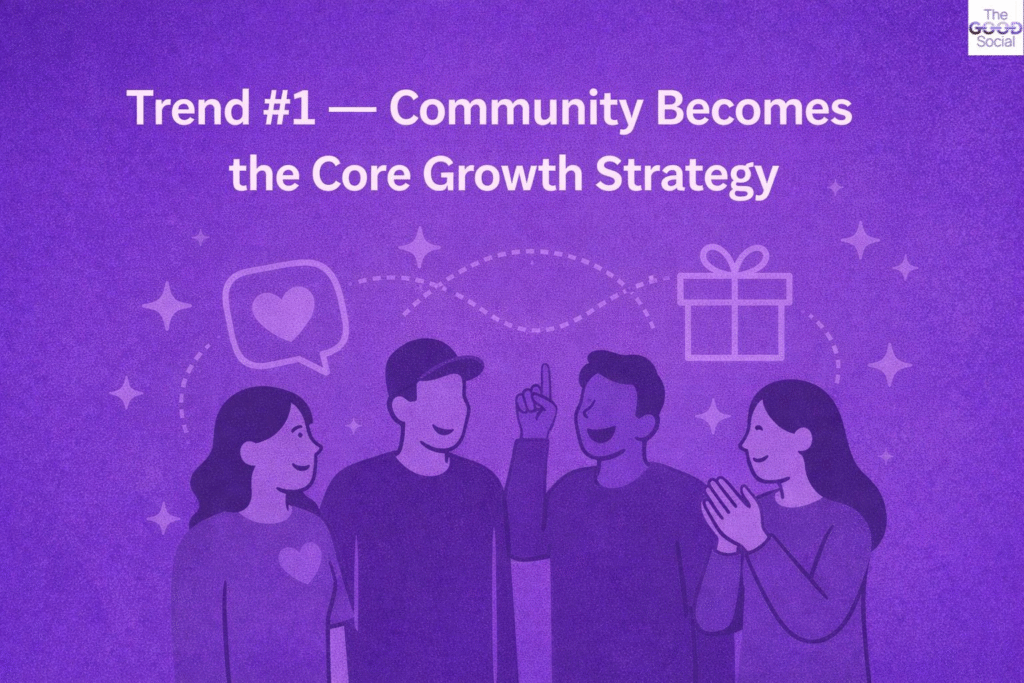
In 2026, nonprofits are shifting away from transactional engagement toward community-centered growth.
Supporters don’t just want updates—they want connection. They want to see themselves reflected in the mission and feel like they belong.
What’s Changing
- One-way communication is losing impact
- Donors and volunteers expect conversation, not campaigns
- Communities are forming around shared values, not just causes
This is why social platforms built for connection—like **https://thegoodsocial.ai**—are becoming essential. Not as tools, but as spaces where nonprofits, donors, volunteers, and everyday people interact as equals.
What Smart Teams Are Doing
- Creating spaces for dialogue, not just promotion
- Highlighting supporters as part of the story
- Building relationships that extend beyond fundraising cycles
For more insights on community-led nonprofit growth, visit https://blog.thegoodsocial.net.
Trend #2 — Digital Presence Becomes Human, Not Just Digital
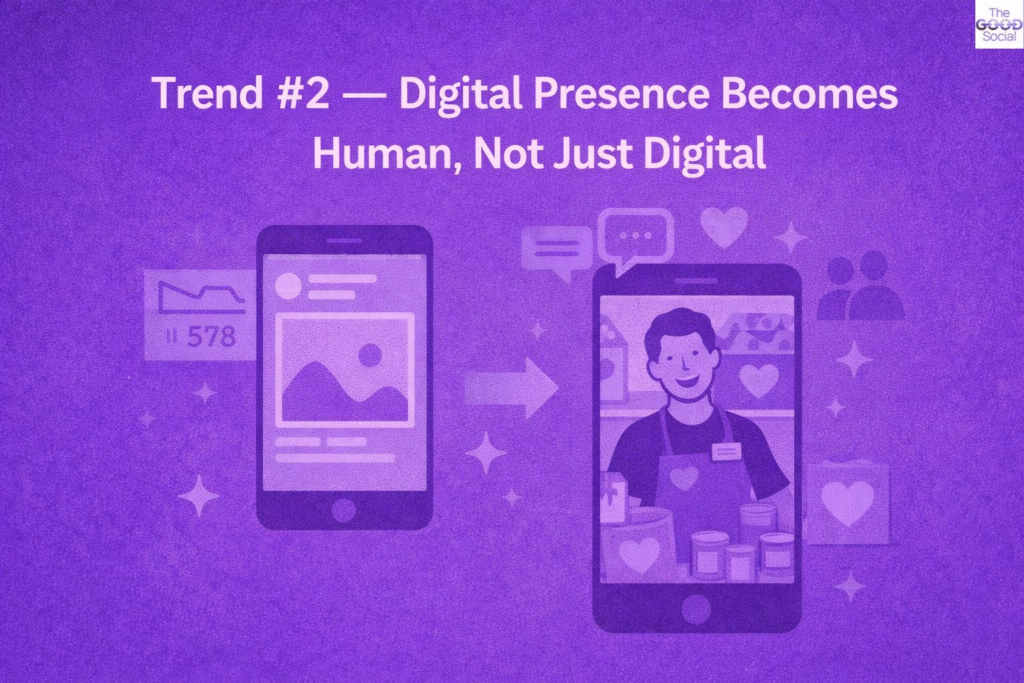
Digital transformation in 2026 isn’t about more technology—it’s about better connection.
Nonprofits are learning that being “online” isn’t enough. What matters is how they show up.
According to HubSpot, audiences are more likely to engage with organizations that feel relatable, transparent, and consistent.
What’s Working
- Honest, behind-the-scenes content
- Mission updates told through people, not numbers
- Platforms that encourage interaction instead of passive scrolling
Smart nonprofits are choosing digital spaces that reflect their values—not just their reach.
Trend #3 — Storytelling Shifts From Campaigns to Continuity
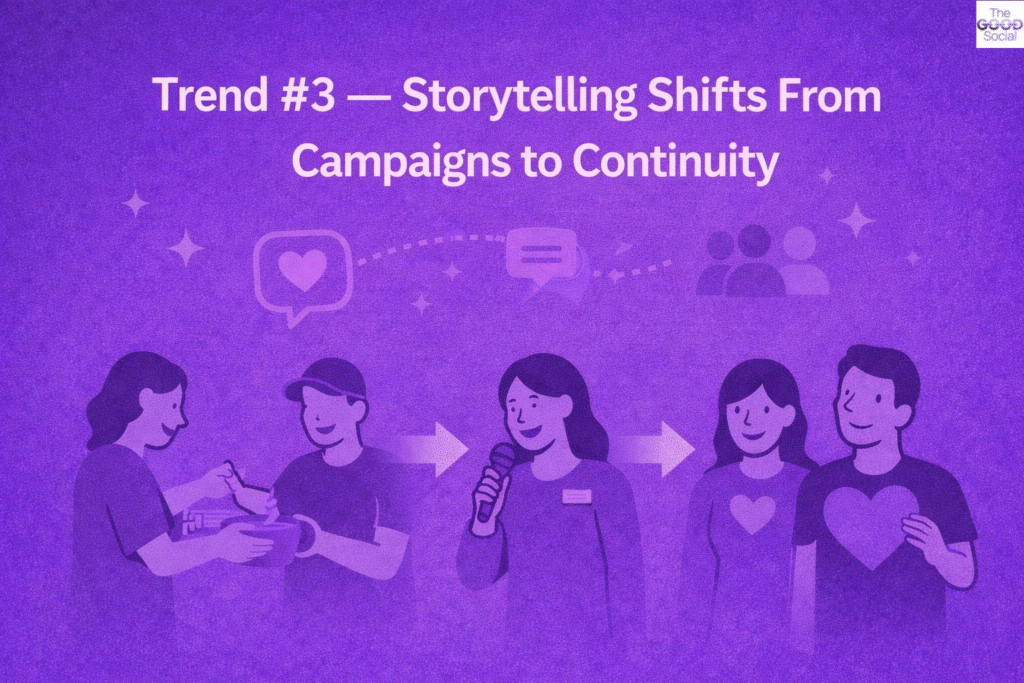
In 2026, storytelling is no longer seasonal.
Nonprofits are moving away from one-off emotional appeals toward ongoing narrative building—where every post, comment, and interaction reinforces the mission.
Why This Matters
Research from Classy shows that donors are more likely to stay engaged when they understand how impact happens over time.
What Smart Teams Are Doing
- Sharing volunteer, donor, and community stories regularly
- Showing progress—not just outcomes
- Using consistent storytelling formats to build familiarity
Storytelling becomes less about persuasion and more about belonging.
Trend #4 — Social Media Is No Longer Just a Marketing Channel
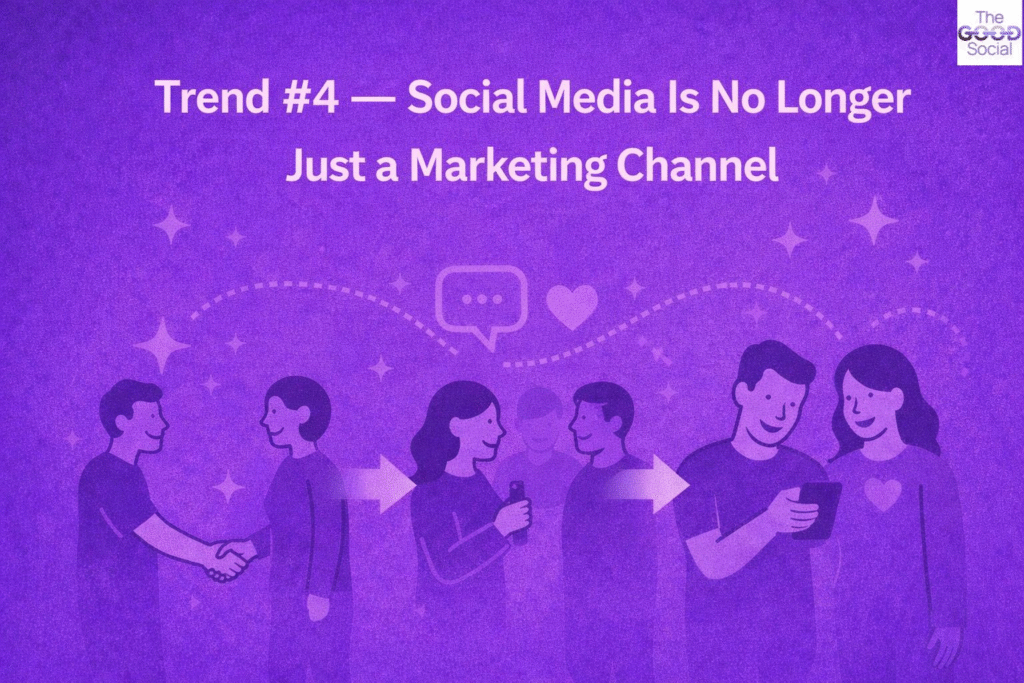
In 2026, social media for nonprofits is evolving from marketing into relationship-building.
Platforms are no longer just places to post—they’re where trust is built.
Insights from Hootsuite show that meaningful engagement consistently outperforms high-volume posting.
What Smart Teams Are Doing
- Choosing fewer platforms, but showing up more intentionally
- Encouraging conversation instead of broadcasting updates
- Participating in communities instead of talking at them
This is where platforms like The Good Social play a unique role—connecting nonprofits with donors, volunteers, and supporters in one shared space.
Trend #5 — Data Gives Context, Stories Give Meaning
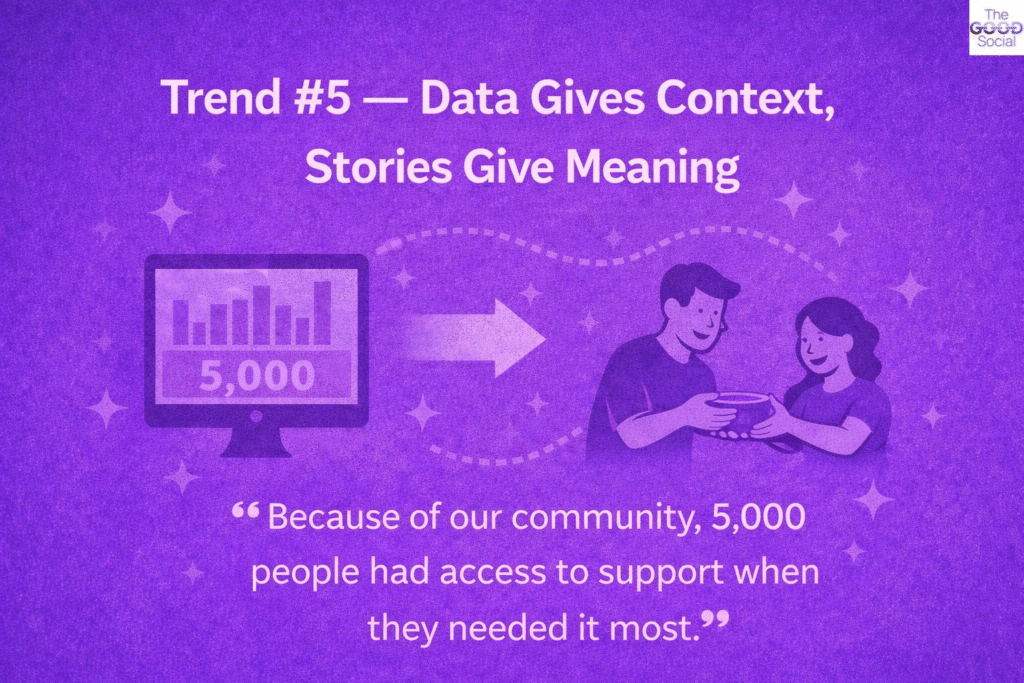
Data will always matter—but in 2026, context matters more.
Supporters don’t connect with metrics alone. They connect with meaning.
Instead of saying:
“We reached 5,000 people this year.”
Smart nonprofits say:
“Because of our community, 5,000 people had access to support when they needed it most.”
What Smart Teams Are Doing
- Pairing impact numbers with real stories
- Showing how community involvement creates change
- Communicating progress transparently
This approach builds trust—and trust fuels long-term growth.
Trend #6 — Intentional Planning Becomes a Leadership Skill
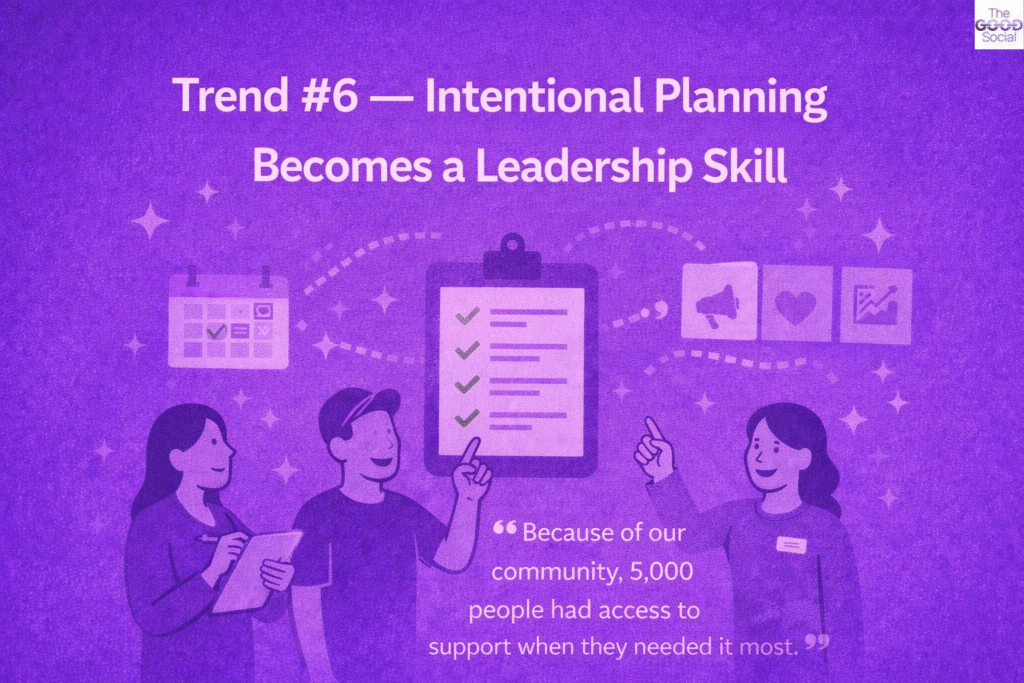
One of the biggest nonprofit trends heading into 2026 isn’t technological—it’s cultural.
Nonprofits are recognizing that constant urgency leads to burnout. Planning creates space for clarity, creativity, and sustainability.
2026 Planning Checklist for Nonprofits
✔ Clarify your community goals
✔ Define consistent storytelling themes
✔ Choose platforms that encourage connection
✔ Create visual and content consistency
✔ Measure engagement, not just reach
Planning isn’t about rigidity—it’s about focus.
What This Means for the Future of Nonprofits
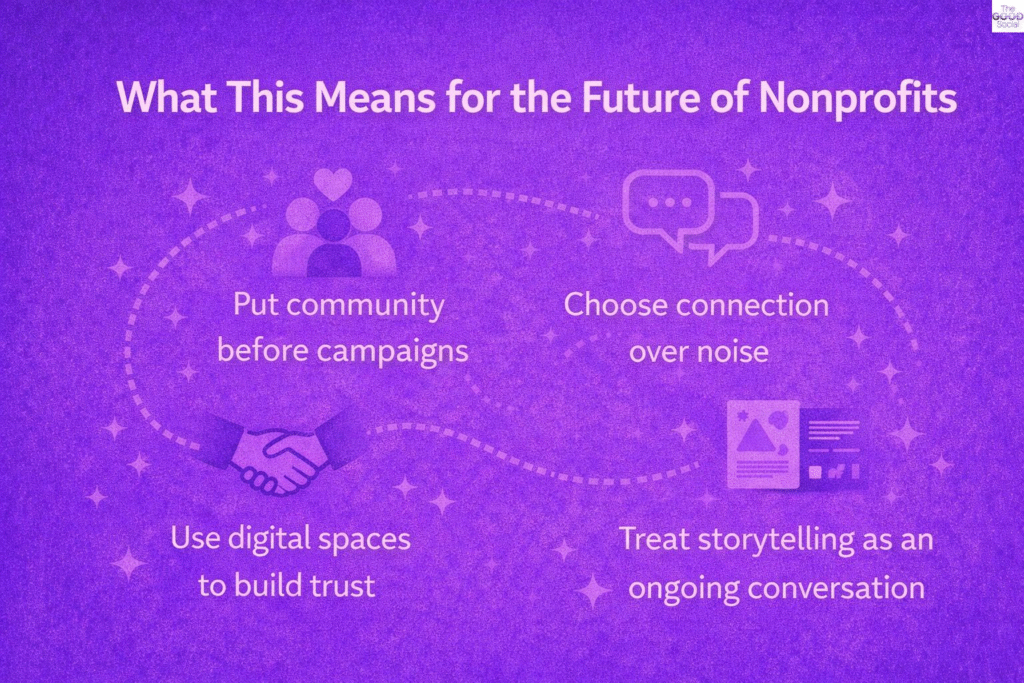
The future of nonprofits is human.
In 2026, the organizations that succeed will be the ones that:
- Put community before campaigns
- Choose connection over noise
- Use digital spaces to build trust
- Treat storytelling as an ongoing conversation
The most powerful growth strategy isn’t louder messaging—it’s deeper relationships.
Further Reading
- HubSpot – Nonprofit Digital Engagement
- Classy – Fundraising & Donor Trends
- Hootsuite – Social Media Trends for Nonprofits
If you’re exploring how nonprofits can grow through community, storytelling, and meaningful digital engagement, visit https://blog.thegoodsocial.net for more insights.
And if you’re ready to connect with donors, volunteers, nonprofits, and everyday people in one shared space, explore https://thegoodsocial.ai — a social platform built for impact, not transactions.