

Every January, nonprofits see a familiar surge—new volunteers, fresh energy, and good intentions fueled by New Year’s resolutions. But by March or April, that enthusiasm often fades. Calendars fill up. Communication slows. Volunteers quietly disappear.
If this sounds familiar, you’re not alone.
Volunteer retention is one of the most persistent challenges in nonprofit engagement today. The issue isn’t a lack of willing people—it’s a lack of systems, storytelling, and community that keep volunteers feeling connected long after the initial excitement wears off.
This guide explores how nonprofits can move from one-time volunteer moments to sustained relationships—using thoughtful engagement, clear follow-up, and a simple engagement funnel that works beyond January.
Why Volunteer Retention Matters More Than Ever
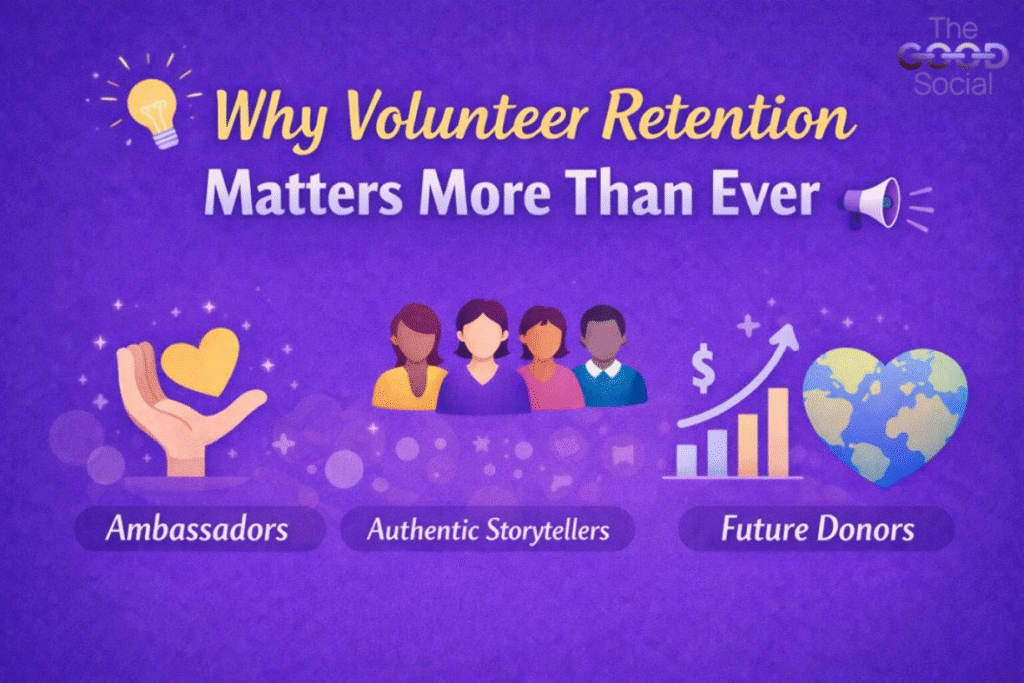
Volunteers are not just “extra help.” They are ambassadors, advocates, donors-in-the-making, and often your most authentic storytellers.
Yet studies consistently show that nearly one-third of volunteers stop engaging after their first experience. The most common reasons?
- They didn’t feel connected to the mission
- No one followed up
- They didn’t know what to do next
- Their time didn’t feel valued
Strong nonprofit engagement strategies focus not just on recruitment, but on what happens after someone raises their hand.
Retention matters because:
- It costs more time and energy to recruit new volunteers than retain existing ones
- Long-term volunteers contribute more hours and deeper impact
- Engaged volunteers strengthen trust and community credibility
Retention is not a retention problem—it’s an engagement opportunity.
Understanding the Volunteer Engagement Funnel
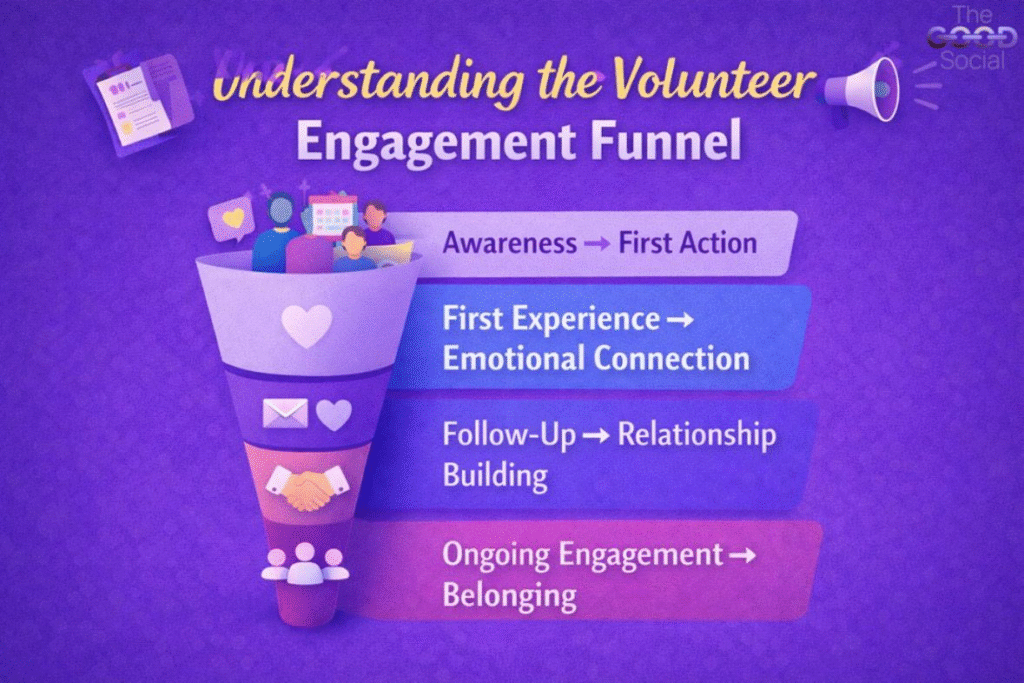
Think of volunteer retention as a journey, not a checkbox.
A simple volunteer engagement funnel looks like this:
1. Awareness → First Action
This is where most nonprofits invest heavily: social posts, campaigns, events, and sign-up forms.
But awareness alone doesn’t build loyalty.
2. First Experience → Emotional Connection
What does the volunteer feel during and immediately after their first experience?
- Were expectations clear?
- Did they feel welcomed?
- Did someone say thank you—personally?
This stage determines whether they return.
3. Follow-Up → Relationship Building
This is where retention is won or lost.
A thoughtful follow-up within 48–72 hours can dramatically increase return rates. Even a simple message acknowledging their time and impact makes a difference.
4. Ongoing Engagement → Belonging
Volunteers stay when they feel like they belong—not when they’re only contacted during campaigns.
This includes:
- Regular updates
- Community stories
- Invitations to participate, not just help
Why Volunteers Drop Off After January
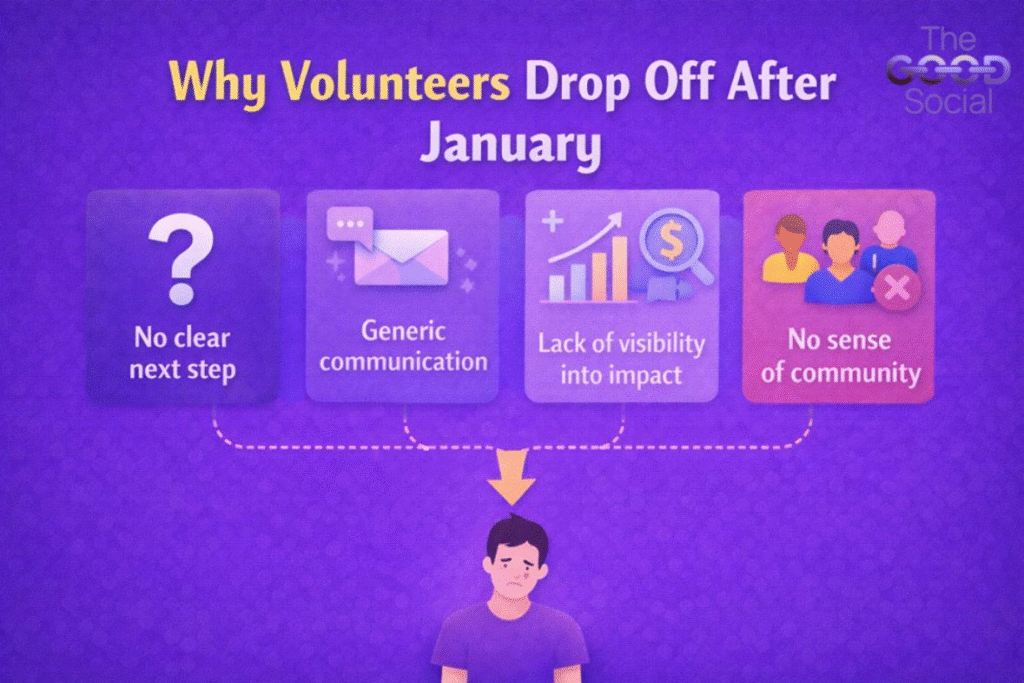
January volunteers are often driven by motivation, not habit. Without structure, motivation fades.
Common drop-off points include:
- No clear next step after the first activity
- Generic mass communication that feels impersonal
- Lack of visibility into impact
- No sense of community or recognition
Retention improves when nonprofits design experiences that invite volunteers into an ongoing story, not a one-time task.
Practical Volunteer Retention Strategies That Work
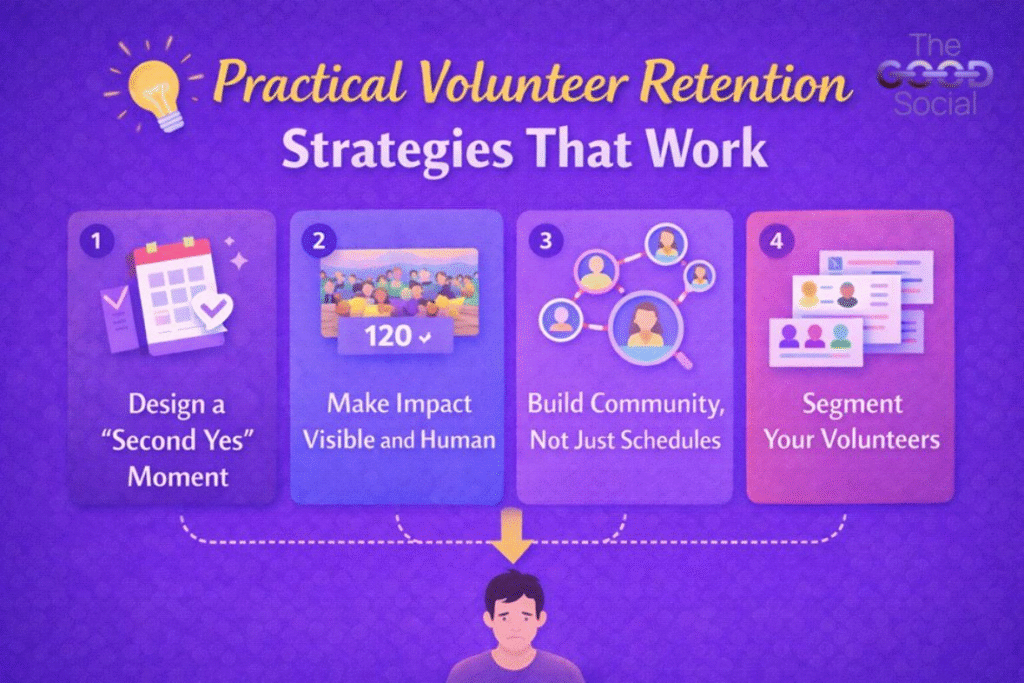
1. Design a “Second Yes” Moment
Your first goal isn’t long-term commitment—it’s getting volunteers to say yes again.
Examples:
- Invite them to a follow-up event before they leave
- Share a quick impact update within days
- Ask for feedback to show their voice matters
This builds momentum.
2. Make Impact Visible and Human
Volunteers want to know their time mattered.
Instead of:
“Thanks for volunteering!”
Try:
“Because of your help last Saturday, 120 families received meals.”
Storytelling strengthens volunteer retention far more than metrics alone.
3. Build Community, Not Just Schedules
People stay where they feel seen.
Ways to do this:
- Highlight volunteers on social media
- Share behind-the-scenes stories
- Encourage volunteers to connect with each other
- Create digital spaces for conversation and updates
Community-led nonprofits consistently outperform transactional ones in engagement.
4. Segment Your Volunteers
Not all volunteers want the same thing.
Some prefer:
- Hands-on work
- Advocacy and awareness
- Digital volunteering
- Event-based involvement
Segmenting communication based on interests leads to higher retention and better experiences.
5. Keep Communication Consistent (Not Overwhelming)
Silence is the fastest way to lose volunteers.
A simple monthly rhythm works well:
- One update on impact
- One story from the field
- One clear opportunity to get involved
Consistency builds trust.
Real-World Example: From One-Time Helpers to Community Champions
A mid-sized community nonprofit noticed that over 60% of their volunteers never returned after January.
Instead of increasing recruitment spend, they:
- Introduced a personalized thank-you message within 48 hours
- Shared a short story showing the impact of that specific volunteer shift
- Invited volunteers to join a community discussion space
Within six months:
- Repeat volunteer rates increased by 35%
- Volunteers began sharing the nonprofit’s content organically
- Engagement felt relational—not transactional
Retention didn’t require more resources—just more intention.
Where Digital Strategy Fits (Without Losing the Human Touch)
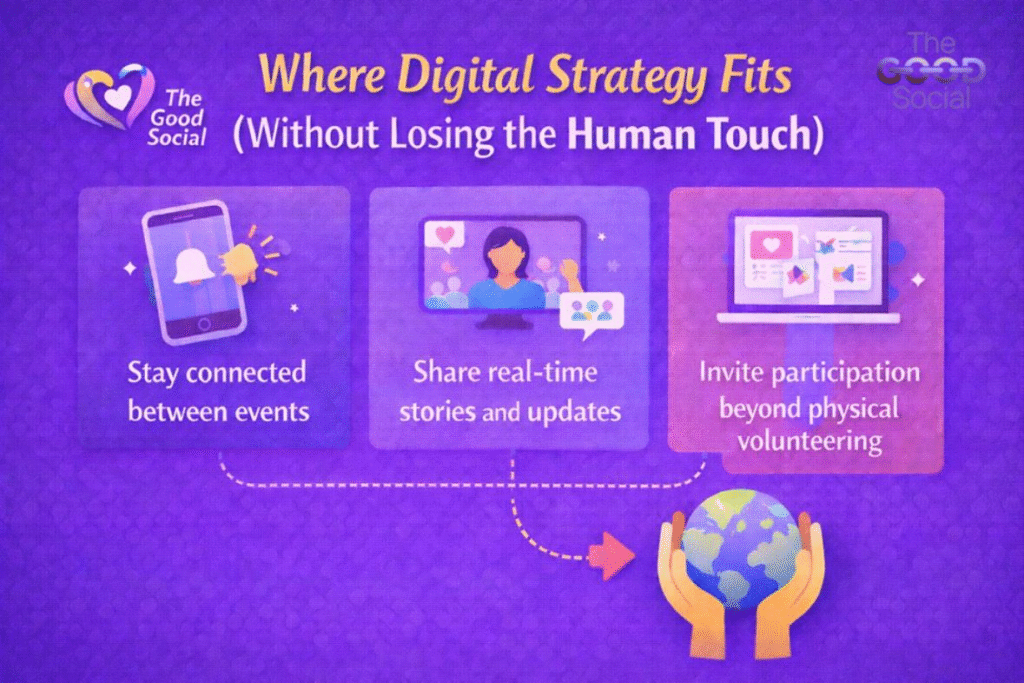
Digital tools should support relationships, not replace them.
Modern nonprofits use digital platforms to:
- Stay connected between events
- Share real-time stories and updates
- Invite participation beyond physical volunteering
The Good Social a social platform designed for donors, nonprofits, volunteers, and everyday people to connect around causes they care about.
When volunteers feel connected digitally and emotionally, engagement lasts longer.
For more insights on digital-first nonprofit engagement, explore:
👉 https://blog.thegoodsocial.net
Volunteer Retention Is a Leadership Mindset
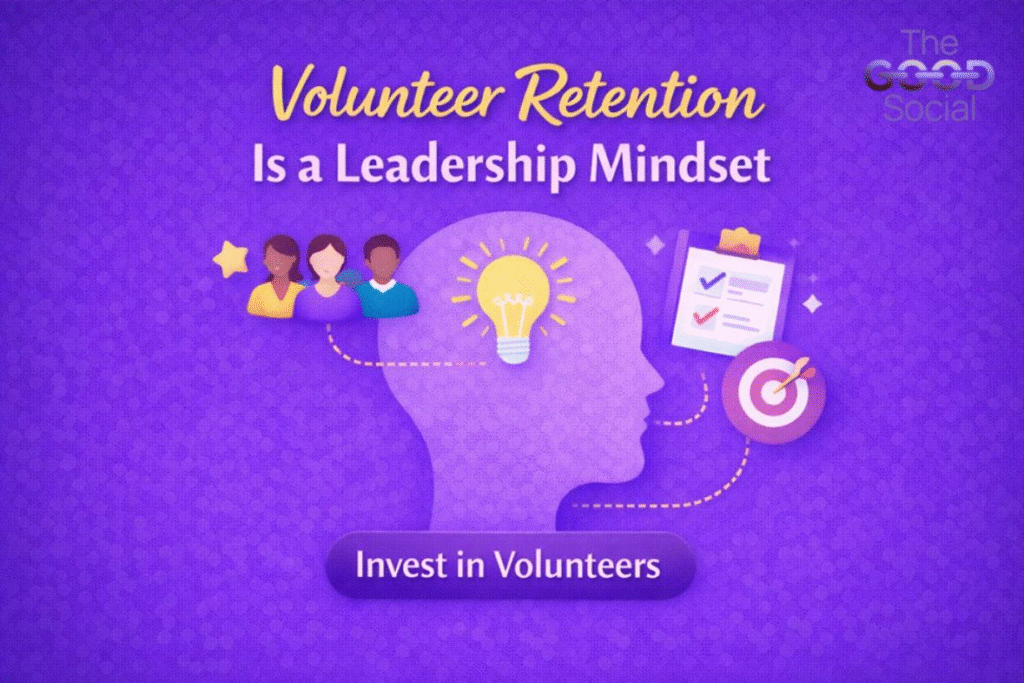
Retention doesn’t sit only with volunteer coordinators—it’s a leadership priority.
Organizations that retain volunteers:
- View volunteers as community members, not labor
- Invest in storytelling and communication
- Design experiences with long-term engagement in mind
The future of nonprofit growth is not just fundraising—it’s relationship building at scale.
Further Reading
- https://www.classy.org/blog/how-to-improve-volunteer-retention/
- https://blog.hubspot.com/marketing/community-building
- https://sproutsocial.com/insights/community-management/
Let’s Build Engagement That Lasts
Volunteer retention doesn’t happen by accident—it’s built through intention, storytelling, and community.
If you’re ready to:
- Strengthen nonprofit engagement
- Build volunteer communities that last beyond January
- Create digital spaces where supporters truly belong
Explore more insights at 👉 https://blog.thegoodsocial.net
And discover how community-led platforms can support your mission at 👉 https://thegoodsocial.ai
Because when people feel connected, they stay. 💜