

Nonprofits are entering a pivotal moment.
By 2026, fundraising will no longer be won by the loudest campaign or the biggest ad budget—but by the strongest community. Donors are evolving. Volunteers are becoming advocates. Supporters want to belong, not just give.
This shift is why community-led fundraising is no longer a trend—it’s becoming the backbone of sustainable nonprofit growth.
If you lead communications, fundraising, or digital strategy at a nonprofit, this isn’t about adding another campaign type. It’s about rethinking how trust, storytelling, and participation flow through your organization.
The Shift from Campaign-Centered to Community-Centered Fundraising
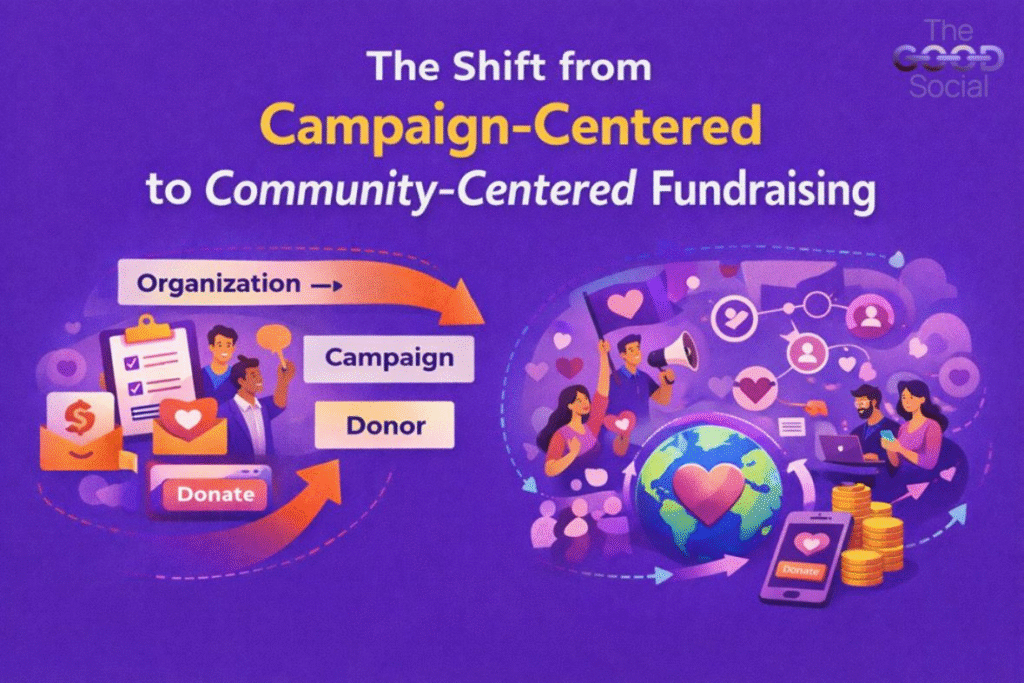
For years, nonprofit fundraising followed a predictable rhythm:
Launch campaign → Send emails → Ask for donations → Say thank you → Repeat.
That model still works—but it’s weakening.
What’s changed?
- Donors expect ongoing relationships, not one-off asks
- Younger supporters trust people over institutions
- Social platforms reward peer influence, not brand broadcasting
Community-led fundraising flips the flow:
Build community → Empower supporters → Share stories → Enable peer action → Grow together
This approach prioritizes shared ownership, where supporters become storytellers, fundraisers, and ambassadors—organically expanding your reach.
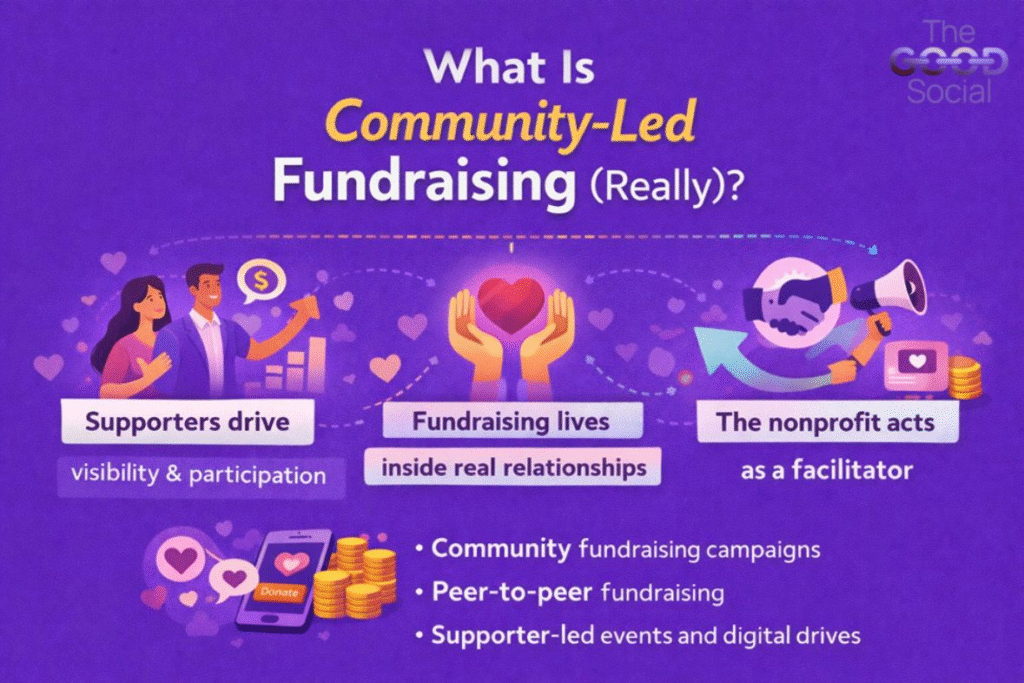
What Is Community-Led Fundraising (Really)?
Community-led fundraising is often confused with peer-to-peer tools or social challenges. Those are tactics. The strategy goes deeper.
At its core, community-led fundraising means:
- Supporters drive visibility and participation
- Fundraising lives inside real relationships
- The nonprofit acts as a facilitator, not just a broadcaster
This includes:
- Community fundraising campaigns
- Peer-to-peer fundraising
- Supporter-led events and digital drives
- Story-driven sharing within trusted networks
The power lies not in scale—but in connection.
Why This Model Will Dominate in 2026
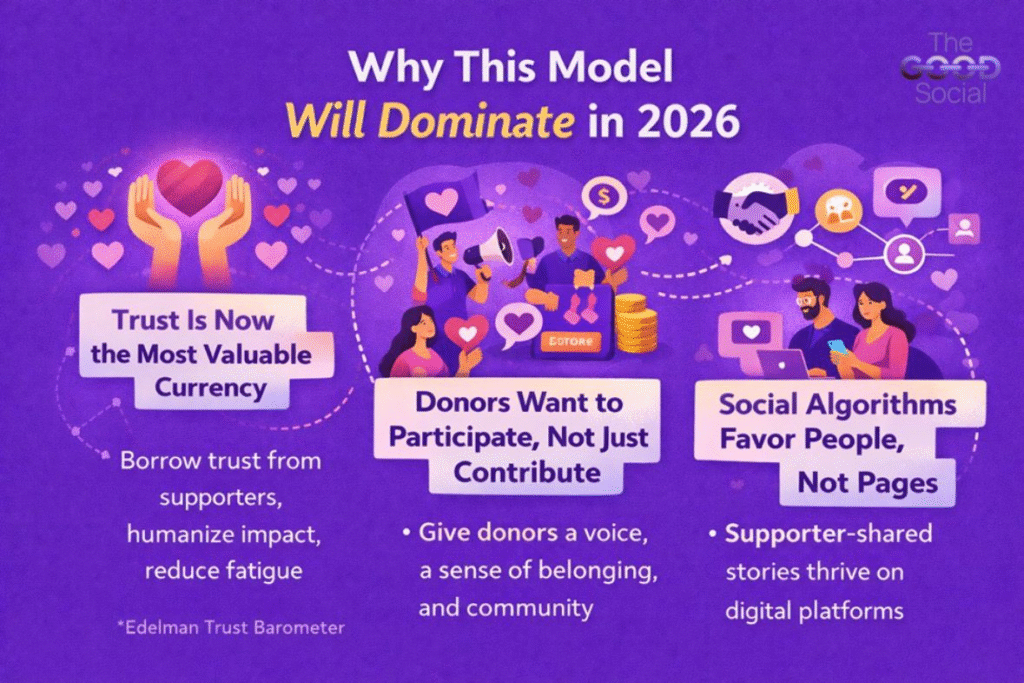
1. Trust Is Now the Most Valuable Currency
According to the Edelman Trust Barometer, trust in institutions continues to decline, while trust in people “like me” remains strong.
When a friend shares a cause they care about, it lands differently than an email blast ever could.
Community-led fundraising allows nonprofits to:
- Borrow trust from their supporters
- Humanize impact through lived experiences
- Reduce donor fatigue through authentic storytelling
2. Donors Want to Participate, Not Just Contribute
In 2026, donors won’t ask:
“Where does my money go?”
They’ll ask:
“How am I part of this?”
Supporters want:
- A voice in storytelling
- A sense of belonging
- Recognition as community members
Community fundraising invites supporters into the mission—transforming passive donors into active partners.
3. Social Algorithms Favor People, Not Pages
Social platforms increasingly prioritize:
- Personal posts
- Group interactions
- Community conversations
That means nonprofit posts alone will struggle to compete—but supporter-shared stories will thrive.
Peer-to-peer fundraising naturally aligns with how digital platforms now work, especially when storytelling feels personal rather than promotional.
Real-World Examples of Community-Led Fundraising
The Ice Bucket Challenge (Still a Masterclass)
The ALS Ice Bucket Challenge succeeded because:
- The community led the momentum
- Participants invited others personally
- Storytelling was simple and emotional
Years later, it remains one of the most effective peer-driven fundraising examples ever executed.
Charity: water and Donor Ownership
Charity: water empowers supporters with:
- Personal fundraising pages
- Transparent impact tracking
- Shareable storytelling assets
Supporters don’t just donate—they advocate, often repeatedly.
The Campaign Flow Visual (Community-Led Model)
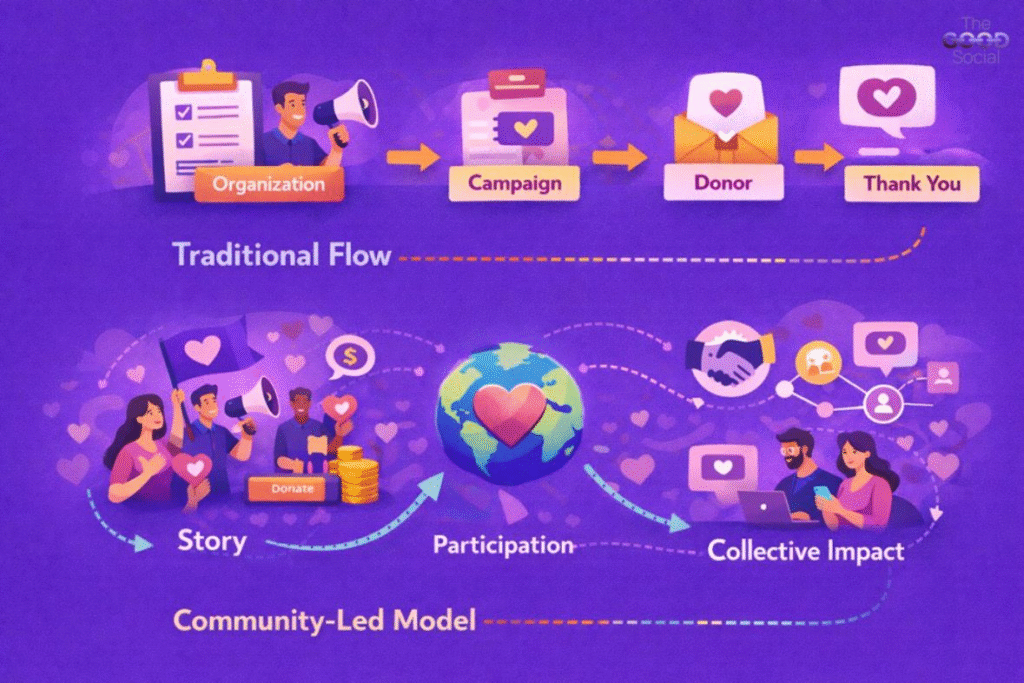
Here’s how community-led fundraising flows differently than traditional campaigns:
Traditional Flow
Organization → Campaign → Donor → Thank You → End
Community-Led Flow
Community → Story → Participation → Peer Sharing → Collective Impact → Ongoing Engagement
This circular flow sustains momentum long after a single campaign ends.
The Role of Digital Platforms in Community Fundraising
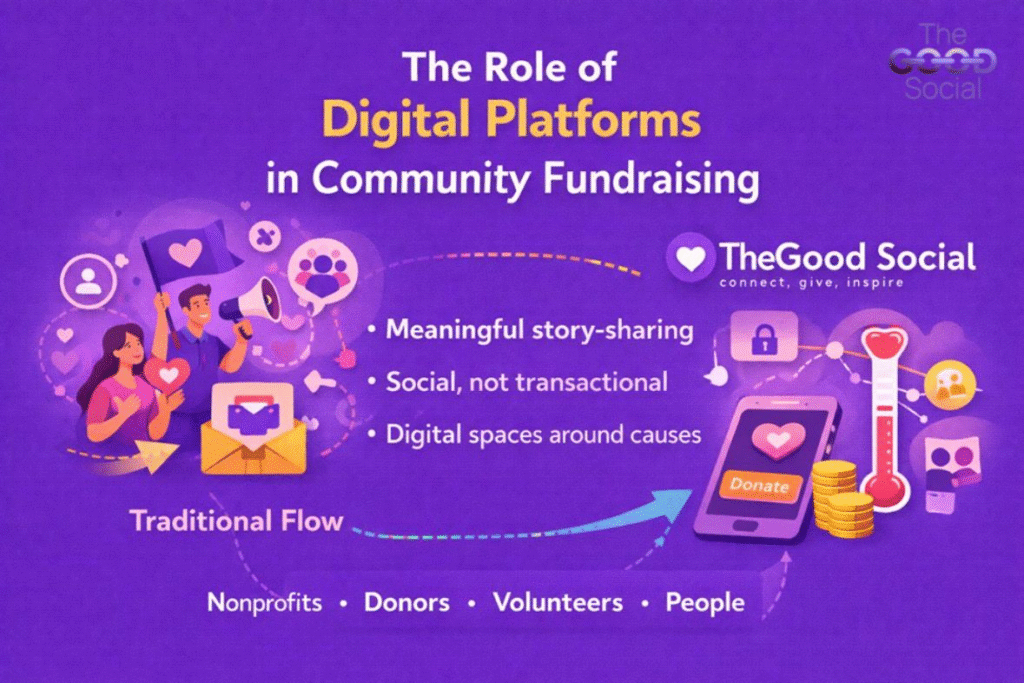
Technology alone won’t build community—but the right platforms can support it.
This is where The Good Social plays a critical role.
Unlike automation-first tools, The Good Social is a social platform designed for:
- Nonprofits
- Donors
- Volunteers
- Everyday people who care
It creates shared digital spaces where:
- Stories travel organically
- Fundraising feels social—not transactional
- Communities form around causes, not campaigns
👉 Explore how nonprofit storytelling and engagement evolve at
https://thegoodsocial.ai
For deeper insights into nonprofit growth strategies, visit:
https://blog.thegoodsocial.net
How Nonprofits Can Prepare for Community-Led Fundraising in 2026
1. Invest in Community Before Campaigns
Build relationships year-round. Campaigns should activate existing trust—not try to create it overnight.
2. Design for Sharing
Create fundraising experiences supporters want to share—simple messages, emotional hooks, and clear impact.
3. Let Supporters Lead the Story
User-generated stories often outperform polished brand content. Give your community permission to speak.
4. Measure Belonging, Not Just Revenue
Track:
- Repeat participation
- Peer shares
- Community growth
These signals predict long-term sustainability better than one-time totals.
Further Reading
- Stanford Social Innovation Review – Trust-Based Philanthropy
- Pew Research Center – Social Trust & Digital Behavior
- Nonprofit Tech for Good – Digital Fundraising Trends
The Future Belongs to Communities
By 2026, the nonprofits that thrive won’t be the ones asking louder—but the ones listening better.
Community-led fundraising isn’t about giving up control.
It’s about sharing purpose.
If you’re ready to grow beyond campaigns and build a movement around your mission:
👉 Read more insights at https://blog.thegoodsocial.net
👉 Build real connections through https://thegoodsocial.ai
Because the future of fundraising isn’t transactional—it’s human.