
In today’s digital-first nonprofit world, donor trust is more than a nice-to-have — it’s a must. Funders, supporters, volunteers — they want to know that their contributions are being used wisely, ethically and effectively. At the heart of that trust lies nonprofit transparency. When you open up about how you work, where funds go and what impact you deliver, you build a stronger bond with your community and your donors.
Here’s how you can lean into transparency to drive nonprofit growth, deepen your storytelling, build community and accelerate your digital transformation.
What Is Nonprofit Transparency — and Why It’s a Game Changer
Defining Transparency in the Nonprofit Sector
Transparency in the nonprofit context means more than annual reports on a shelf. It means: clear communication about how donations are allocated and spent, with accessible financials and impact‑data, open storytelling about successes and challenges, and making data, outcomes and processes visible so donors can see the value of their support.
Why It Matters for Donor Trust, Growth & Community Engagement
1. Builds deeper donor trust.
2. Increases donor loyalty.
3. Enhances reputation and credibility.
4. Enables effective storytelling & community building.
5. Supports your digital transformation.
A Real‑Life Example of Transparency in Action
Consider a small NGO working in rural education. They decided to publish monthly micro‑report cards showing enrollment, textbooks, and training. Donors commented they felt like ‘partners’ not just ‘contributors’; repeat gifts rose; new donors referenced how they ‘saw the impact’.
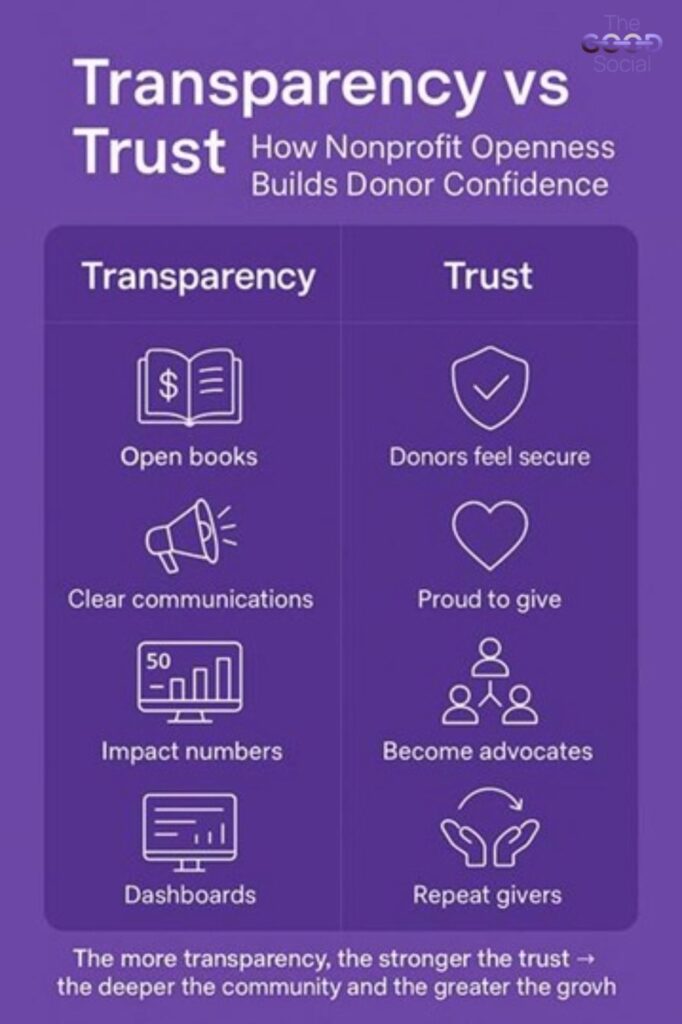
The Transparency vs Trust Infographic
Infographic idea: ‘Transparency vs Trust: How Nonprofit Openness Builds Donor Confidence’ — left: Transparency (open books, data, dashboards), right: Trust (confidence, loyalty, advocacy).
How to Achieve Donor Transparency (Step‑by‑Step)
Step 1 – Start with the ‘Open Books’ Mindset
Publish audited statements, provide clear breakdowns, and develop visible policies.
Step 2 – Tell the Story Behind the Numbers
Use visuals, clear storytelling, and show both wins and lessons learned.
Step 3 – Activate Community Engagement
Make donors part of the journey with updates, behind‑the‑scenes looks, and feedback opportunities.
Step 4 – Digitally Transform Your Transparency Game
Leverage automation tools (like thegoodsocial.ai) to share dashboards and updates efficiently.
Step 5 – Create a ‘Where Your Money Goes’ Page
Show donors clear visuals, narrative, numbers, and a call to action to stay informed.
Step 6 – Measure & Iterate
Track donor retention and satisfaction; adjust based on feedback.
Aligning Transparency with Nonprofit Growth, Marketing & Storytelling

Transparency is not just compliance. It’s a marketing and growth engine — strengthening brand credibility, storytelling, community loyalty, and data-driven strategy.
Common Pitfalls & How to Avoid Them
Avoid complex financials without context, silence on setbacks, or one‑way communication. Keep language donor‑friendly and interactive.
Where The Good Social (TGS) Comes In

TGS helps nonprofits with tools and automation to streamline reporting, storytelling, and transparency strategies. Visit blog.thegoodsocial.net for insights and thegoodsocial.ai for automation solutions.
Conclusion
Donor transparency isn’t optional. It’s a strategic imperative for nonprofits. With the right tools, storytelling, and openness, your nonprofit can deepen trust and grow sustainably.
Further Reading
– FundsforNGOs: The Importance of Transparency in Building Donor Trust
– Whole Whale: Nonprofit Transparency Best Practices
– Bloomerang: How Transparency Drives Donor Loyalty
Visit blog.thegoodsocial.net for more nonprofit growth insights and thegoodsocial.ai to explore tools and automation for transparency and donor engagement.